
To delve deeper into the concepts covered in REMIT’s second conference session’s topics, and to offer participants a glimpse of what awaits them (or why you should register if you haven’t already!), we’ll be rolling out a Session Series in the weeks leading up to the event.
The penultimate content session in our conference is the one that kicks things off on the second day – Panel 2!
| April 16, 09:30 – 11:00 | Panel 2: “Human Rights and Digital Governance” Chair: Flavia Lucenti (Luiss Università di Roma) Speakers: Magdalena Musiał-Karg (Adam Mickiewicz University Poznań, IPSA), Claudia Padovani (University of Padova), Dennis Redeker (University of Bremen), Mauro Santaniello (University of Salerno) |
The panel is led by our hosts, the Italian Luiss Università di Roma.
The panel examines if existing international human rights frameworks are capable of addressing the challenges posed by rapidly evolving technologies, or whether new regulatory and governance mechanisms are needed. The panel will also discuss the role of states, international organisations and private actors in ensuring accountability and transparency in digital governance.
Session speakers

Flavia Lucenti is a postdoctoral researcher for the EU Horizon Project REMIT and an adjunct professor at LUISS University, Department of Political Science. Her research interests include IR theory, China, Russia, technology and norms. Previously, she was a research assistant at the University of Oxford and a postdoctoral research fellow and adjunct professor in International Politics at the University of Bologna. Flavia also worked as a researcher for the Research and Analysis Institute of the Italian Ministry of Defence. She holds a PhD in Political Studies and International Relations from the University of Roma Tre. She was a visiting PhD candidate at the Hong Kong University, the Moscow State Institute of International Relations and the European University Institute. From 2020 to 2023 she was a member of the Early Career Development Group of the European International Studies Association. From 2021 to 2024, Flavia was a deputy editor for the issue Global Policy: Next Generation of the journal Global Policy. Her main publications appear in International Politics, Cambridge Review of International Affairs, Geopolitics, Journal of Contemporary European Studies, Global Policy and the Italian Political Science Review.

Magdalena Musiał-Karg is a Professor of Political Science at the Faculty of Political Science and Journalism, Adam Mickiewicz University in Poznań, Poland. She serves as President of the Polish Political Science Association (2022–2025; 2025–2028). She is Vice-President of the International Political Science Association (IPSA) for the term 2025–2027 and a member of its Executive Committee (2023–2025; 2025–2027). She is also a member of the ODIHR Core Group of Experts on Political Parties at the OSCE Office for Democratic Institutions and Human Rights. Her research focuses on direct democracy, electoral processes, and the use of new technologies in democratic systems, with particular attention to e-voting.
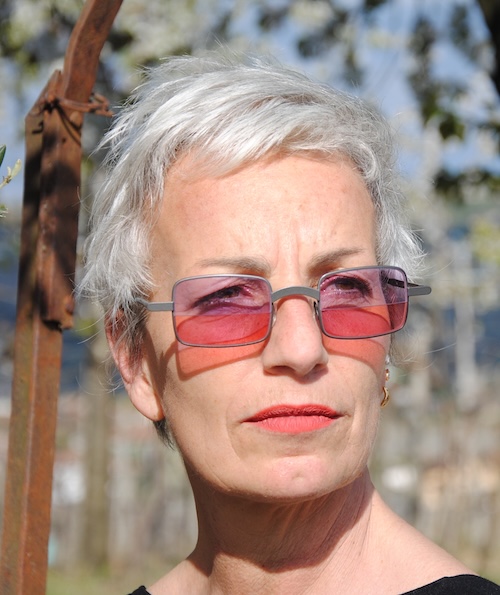
Claudia Padovani is Associate Professor in Political Science and International Relations at the University of Padova (Italy) where she teaches courses on Communication Governance and digital sovereignty, and Communication Practices, Diversity and Inclusion. Her research concerns the global governance of communication with a focus on gender inequality issues, communication rights and social justice. Her publications cross disciplinary domains, in an attempt to engender the fields of media policy and communication governance. At the University of Padova, she is Director of the Elena Cornaro Center for Gender Studies and reference person for the Scholars at Risk international network.
Padovani co-chairs the Working Group on Global Media Policy of the International Association of Media and Communication Research (IAMCR) and the UNESCO UniTWIN Network on Gender Media and ICT in the context of which she is currently involved in a project titled Gender Justice, AI and Digital Governance.
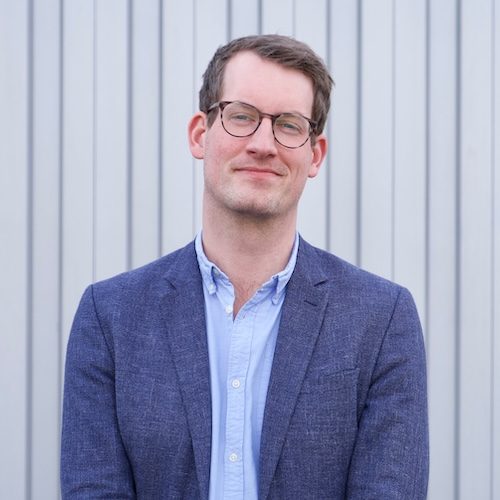
Dennis Redeker is a postdoctoral researcher at the Centre for Media, Communication and Information Research (ZeMKI) at the University of Bremen. His research focuses on global technology governance, particularly in the areas of Internet, platform, and AI governance. He currently leads the project AI PAN-AFRICANISM – “Fostering Digital Pan-Africanism in AI Governance through Evidence and Action”.
Dennis is a founding member of the interdisciplinary Digital Constitutionalism Network (DCN), which explores the role of human rights in the digital age and the increasing constitutionalization of digital technologies. He holds a PhD in Political Science and an MA in International Relations from the University of Bremen/Bremen International Graduate School of Social Sciences, as well as a BA in Liberal Arts and Sciences from University College Maastricht.
Dennis is a Visiting Professor at the Center for Technology & Society (CTS) at FGV School of Law in Rio de Janeiro, and he leads REMIT’s work package on the “normative construction of technology governance.”
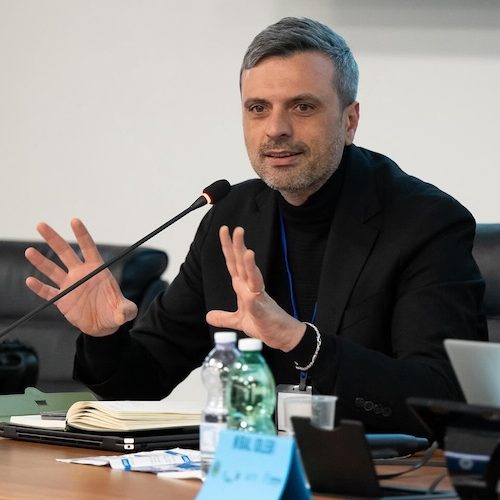
Mauro Santaniello (PhD) is Associate Professor of Political Science at the University of Salerno, where he teaches Internet Governance, Digital Policy and International Relations. He is Associate Research Fellow at the UNU-CRIS, working within the Digital Governance Cluster, and directs the Internet & Communication Policy Center (ICPC). He is Principal Investigator of the PRIN project ‘Digital Sovereignty in Comparative Perspective: State Authority, Corporate Power and Fundamental Rights in Cyberspace’, funded by the Italian Ministry of University and Research. He also coordinates the GIG-ARTS conference series and serves as secretary of Giganet. His main research interests include internet governance, digital sovereignty, digital constitutionalism, cybersecurity policy, and geopolitics of information networks.